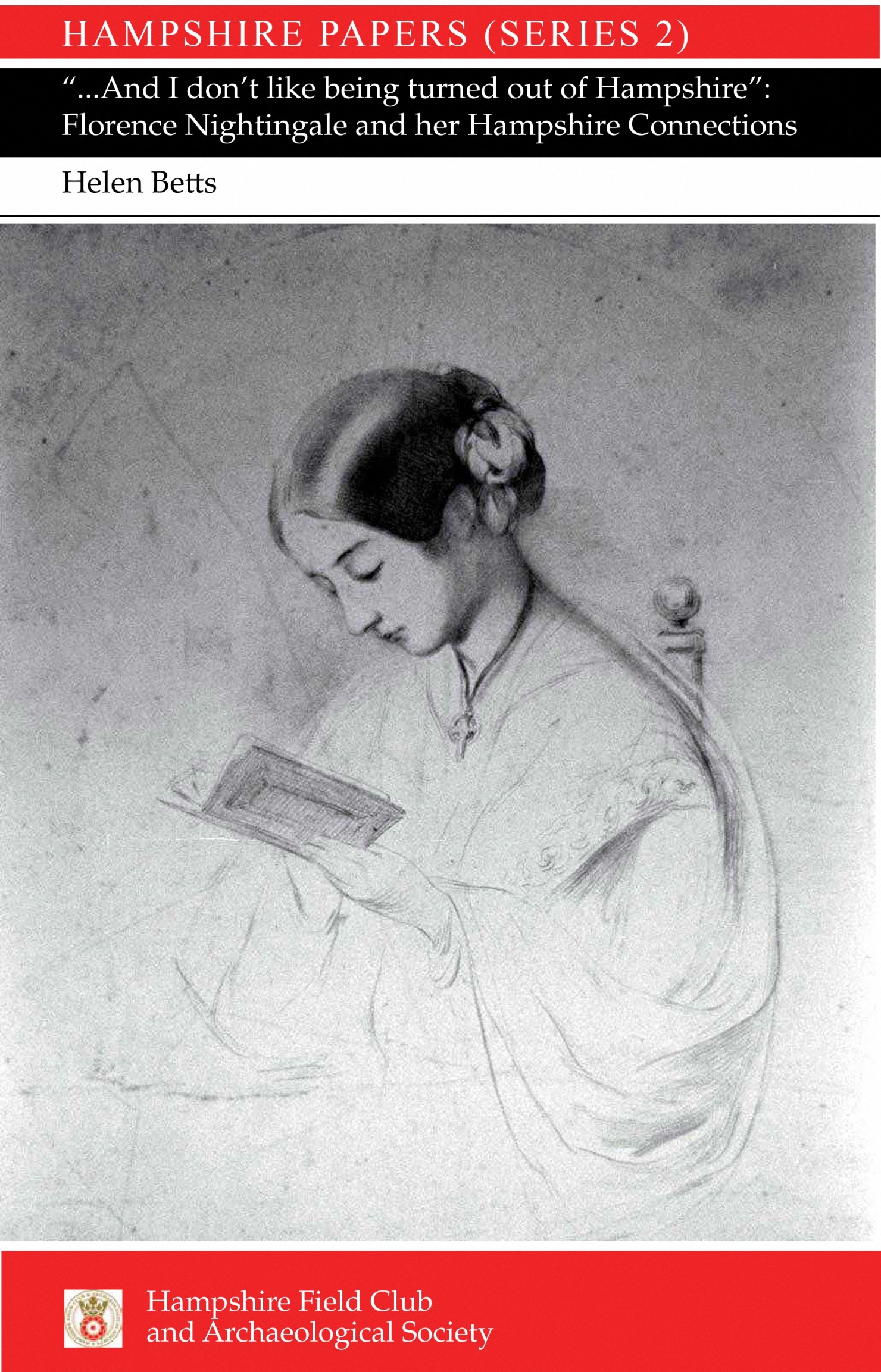
Florence Nightingale (1820-1910) spent much of her first thirty four years of life in Hampshire at the family home, Embley, near Romsey, where their father educated her and her sister. She had a great fondness for the county and said: “I don’t like being turned out of Hampshire” in 1896 when Embley was sold. Her call to God’s service at the age of 16 years also occurred at Embley, and here she struggled with her family to be allowed to follow her calling with their blessing. At Embley Florence received suitors and refused marriage proposals, for the sake of her calling. She had a large extended family including the Bonham Carters of Ditcham, near Petersfield, the Nicholsons of Waverley Abbey, Farnham, Surrey and the Smiths from Parndon Hall, Essex. The families all socialised regularly and the children would often spend the summer at the ancestral home, Lea Hurst, Derbyshire with Christmas at Waverley Abbey, September and the spring season in London and the rest of the year at Embley. This paper explores how Florence was able to use her position and social connections in Hampshire to move in spheres generally regarded as off-limits for women in nineteenth-century England. When Florence returned from the Crimean War she lived and worked in London, but never lost her love for Hampshire. She visited her parents at Embley and sent friends there for convalescence and holidays. She was actively involved in the development of the Royal Victoria Hospital, Netley and the Royal Hampshire County Hospital, Winchester. Florence Nightingale has not been “turned out of Hampshire”. She continues to draw admirers to the tiny church of St Margaret of Antioch, East Wellow; a thirteenth-century century flint church, at which this exceptional woman, though not born in Hampshire, was laid to rest, marked by a simple gravestone.
Florence Nightingale and her Hampshire Connections
£11.00
including postage and packing
Members please contact the Publications Secretary
How Florence was able to use her position and social connections in Hampshire to move in spheres generally regarded as off-limits for women in nineteenth-century England.