In 1902 Britain and Japan signed the Anglo-Japanese alliance and in 1914 Japan joined Britain in the war against Germany. The Japan Red Cross Society had already gained a high reputation in the west, and the Japanese Government soon decided to send Red Cross Relief Missions to the allies; all at Japan’s expense. Missions travelled to Britain, Russia and France and of these the mission to Britain was clearly the most significant. It consisted of 20 female nurses, 2 highly qualified doctors, an interpreter and a secretary. The group travelled via Hawaii, the United States and the Atlantic, and arrived in Liverpool in January 1915. As representatives of an important ally the mission received a lavish official welcome including a meeting with Queen Alexandra. In February 1915 the Japanese finally began work at the newly constructed Red Cross Hospital at Netley. All members of the Japanese Mission were well trained and experienced, in contrast to many British Red Cross volunteers. The missions work was highly valued and great efforts were made to integrate the Japanese into the working of the hospital. As patient numbers grew an increasing number of wards were placed under Japanese supervision. Furthermore, the Japanese were warmly entertained by prestigious Hampshire families. Initially the Japanese had planned to leave Britain after six months service, but the shortage of experienced British personnel led the British Government to request an extension of the mission’s stay. In the summer of 1915 the Japanese Red Cross agreed that the mission would remain until the end of the year. At the close of their stay in Netley the mission was entertained by the Lord Mayor of London, and all members received gifts from Queen Alexandra. The two doctors and the two chief nurses were decorated by King George V. This paper makes full use of both Japanese and British primary and secondary sources to analyse the missions work in Hampshire and its medical and political effectiveness as part of Japan’s war time diplomacy. In addition to the specific circumstances of the Japanese nurses in Netley, these sources include several hitherto untranslated speeches made by the Japanese ambassador in 1914 which throw light on broader aspects of Japanese-European relations during the nineteenth and early twentieth centuries as well as the history of medicine in a British context. The speeches highlight Japanese intentions of using this mission to counter pejorative European stereotypes of the nation by highlighting Japanese humanitarian power in a global context.’
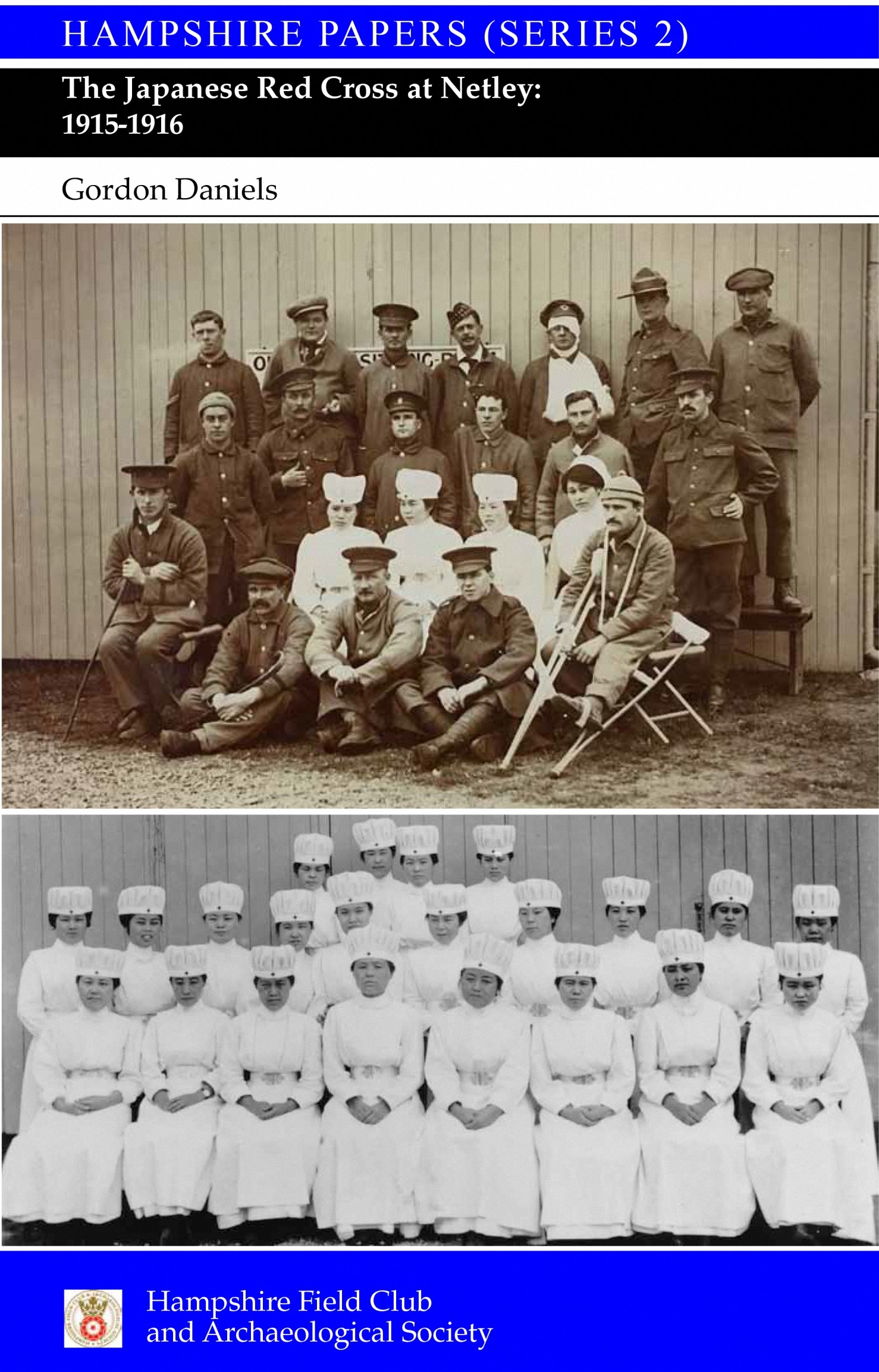
The Japanese Red Cross at Netley
£11.00
including postage and packing
Members please contact the Publications Secretary
Japanese Red Cross Relief Missions Missions travelled to Britain, Russia and France and of these the mission to Britain was clearly the most significant.