| Programme of EventsMembershipPublicationsEditorial BoardOfficers | Library | Medieval Graffiti Survey |
|
|
Hampshire Field Club & Archaeological Society |
| Registered Charity number 243773 | HomepageArchaeologyHistoric Buildings Hampshire Papers LandscapeLocal History |
 |
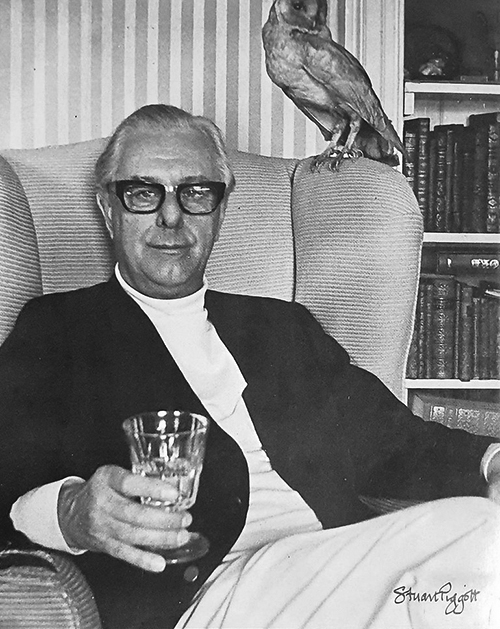
Celebrating Hampshire HistoriansPiggott, Stuart Ernest28 May 1910 – 23 September 1996See also: Guido (PIggott), Cecily Margaret (Peggy) Stuart Piggott was born in Petersfield. By the age of 14 he was writing about ‘The Prehistoric Remains at Petersfield’ and at 18, encouraged by contact with Heywood Sumner and Williams-Freeman, drawing plans of earthworks on Butser Hill. These came to the attention of O G S Crawford, resulting in work at Reading Museum, an invitation to excavate at The Trundle, West Sussex, and a job with the Royal Commission on the Ancient and Historical Monuments of Wales. Not keen on Wales, Piggott devoted his energies to studying Neolithic pottery and the distribution of long barrows. His first excavation was at Thickthorn Down Long Barrow in Dorset in 1933 and three years later he examined Holdenhurst Long Barrow (then in Hampshire) threatened by house building. With time of the essence, Piggott employed the contractor’s steam shovel, probably the first deliberate use of a machine to aid archaeological excavation in the country. In 1936 he married Cecily Margaret Preston (Peggy Piggott) and they set up home at Priory Farm, Rockbourne. By this time Piggott was assisting Alexander Keiller at Avebury, but the married couple also worked as freelance excavators adding, among many other sites, Little Woodbury, Salisbury, and Sutton Hoo, Suffolk, to their portfolio. With World War II came inevitable disruption, but also the opportunity to become an archaeologist of international renown. In 1946 Piggott accepted the Abercromby Chair at Edinburgh University and forged an academic and excavating career that ensured his place in the ‘golden generation’ of 20th century archaeologists, alongside C F C Hawkes and others. Sources
Portrait
Contribution to county’s historyStuart Pigott cut his teeth in surveying earthworks in the Petersfield area and in examining numerous monuments in other corners of the county, before firstly the war and then the demands of an academic career carried him off to other locations. Relevant published works
Critical CommentsOther CommentsContributorDave Allen, January 2022 Key Wordsarchaeology, neolithic pottery, long barrows Any queries or further suggestions for this part of the list should be addressed to celebrating@hantsfieldclub.org.uk.
| |
| Contact Any questions about the web site? Then email Webmaster |
||