| Programme of EventsMembershipPublicationsEditorial BoardOfficers | Library | Medieval Graffiti Survey |
|
|
Hampshire Field Club & Archaeological Society |
| Registered Charity number 243773 | HomepageArchaeologyHistoric Buildings Hampshire Papers LandscapeLocal History |
 |
Celebrating Hampshire HistoriansStevens, Joseph1818 - 1899The son of a farmer from Stanmore, Berkshire, on leaving school he lacked the means to study medicine. He trained as a pharmacist and worked as a dispenser until 1841. A legacy then enabled him to enter Middlesex Hospital Medical School. Winning several prizes he qualified MRCS, LRCP and in 1845 was appointed Medical Officer to the Poor Law Union for Whitchurch in Hampshire. Choosing the then obscure rural parish of St. Mary Bourne as his home, he married its leading farmer’s daughter and practised as the village doctor, retiring to Reading in 1879 after the death of his wife. He combined an outstanding medical career with a lifelong interest in local archaeology and history and lectured and wrote widely. In retirement, his crowning achievements were to help found and curate the Reading Museum and to publish a model history of St. Mary Bourne. That an otherwise unknown rural village doctor merited an obituary in The Times is remarkable. It wrote of his ‘high character and exceptional ability…he threw himself into every movement calculated to improve the physical and moral condition of the people among whom he lived.’ Sources
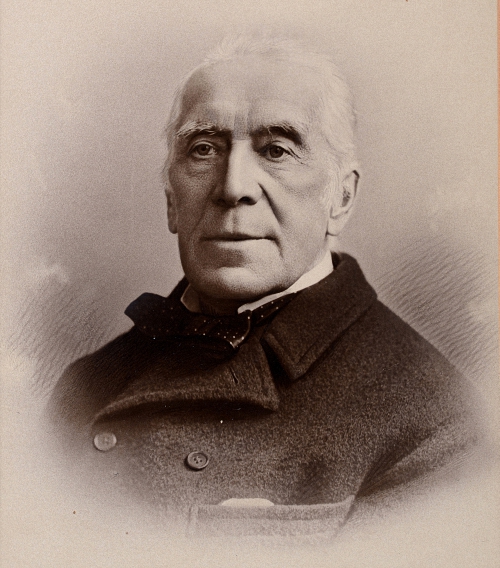
Portrait
Contribution to county’s historyHis monumental A parochial history of St Mary Bourne, Hants, also covering Hurstbourne Priors, published in 1888, foreshadows and arguably outdoes today’s VCH parish histories, with its better archaeological information, its interest in records of diseases and local folk medicine and, for us today, its valuable record of the rarer wild flowers. Later editions, the last in 1895, added local customs and dialect words and their meanings. With many beautifully drawn illustrations by the author, it is a truly remarkable achievement ‘declared by those most competent to judge, to be a model of what such a history should be’ (The Times, 8th April 1899). Relevant published works
Critical CommentsStevens was a gifted polymath, largely self-taught, with high standards of meticulously recorded research, both archaeological and historical, the more remarkable for the relative inaccessibility of sources in his day. Equally, in retirement he was a pioneer in seeing museums not as ‘cabinets of curiosities’, but places of education, thereby anticipating many aspects of modern museum practice. He deserves to be much better known. Other CommentsStevens, a lifelong Gladstonian Liberal, was also local member for Hampshire for the British Archaeological Association, Chairman of the Board of the village school, founder of its Labouring Men’s Association and of the Berkshire Field Club and other ‘Scientific Societies.’ He was an early convinced Darwinian. ContributorJohn Isherwood: 25.9. 21. Key WordsSt. Mary Bourne, Hurstbourne Priors, Chute Forest, geology, archaeology, history of medicine, local customs & punishments, dialect, botany, working class education, diet, allotments, Poor Law, Swing Riots, church architecture. Any queries or further suggestions for this part of the list should be addressed to celebrating@hantsfieldclub.org.uk.
Back to Historians R-T from Ravenscroft, William to Trussell, John | |
| Contact Any questions about the web site? Then email Webmaster |
||